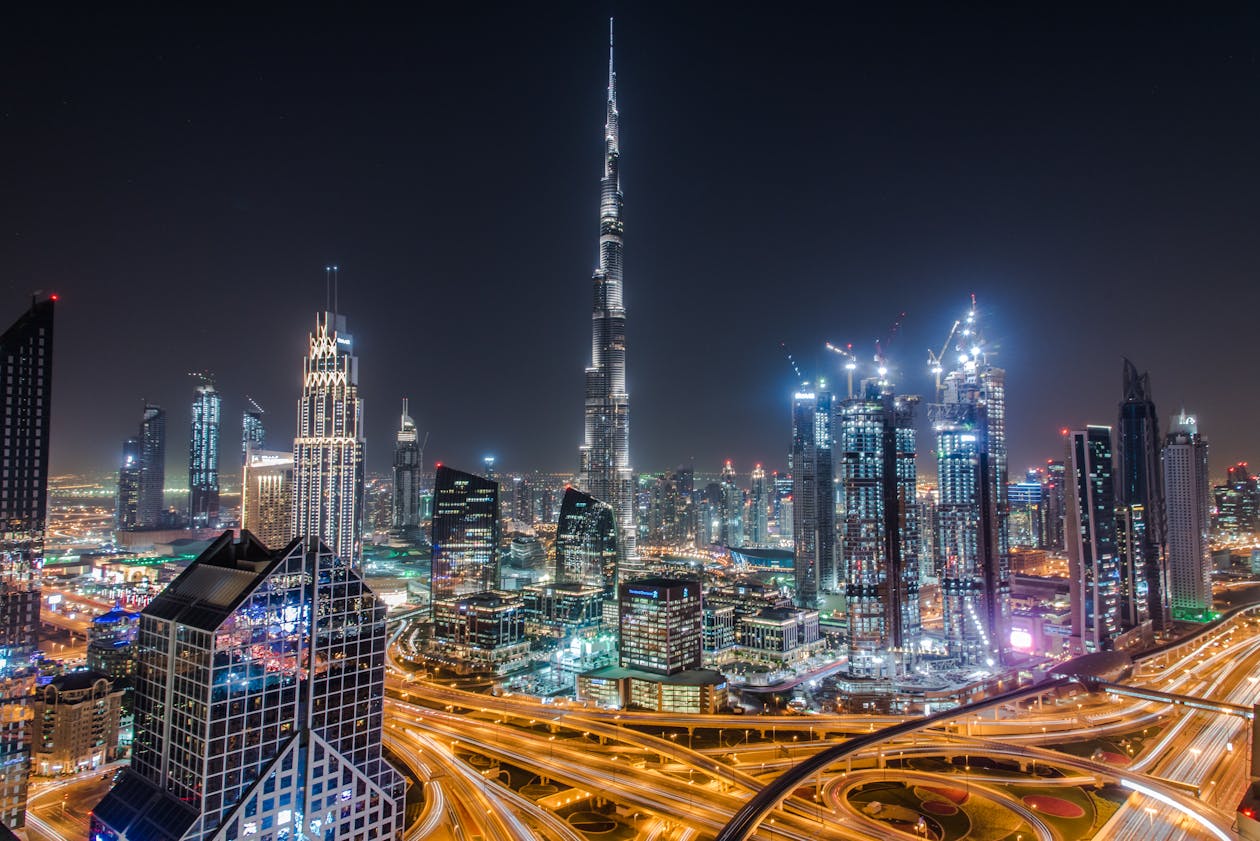
Dubai Holding and Emirates NBD just embedded mortgage pre-approval into off-plan sales across Meraas, Nakheel, and Dubai Properties — arriving as off-plan hits 70% of Q1 2026's AED 176.7B market. Primary-market liquidity is deepening, secondary-market liquidity is thinning, and Ras Al Khaimah is repricing on its own single-catalyst trade. Three signals allocators need in one model.
For a decade, Dubai's off-plan market has run on one financing rail: the developer's payment plan. Twenty percent at booking, sixty percent across construction, twenty percent at handover. No bank in the transaction until completion. No leverage until the keys are in hand.
That model is ending.
On April 16, Dubai Holding Real Estate and Emirates NBD signed an MoU that moves mortgage pre-approval to the booking stage across Meraas, Nakheel and Dubai Properties. For the first time at this scale, an off-plan buyer can walk into a Tier-1 developer's showroom and leave with bank-underwritten financing already in place — years before handover.
That's a structural shift dressed up as a product launch. And it lands at precisely the moment the data says it matters most: off-plan has climbed from 55% of Dubai transaction value in 2024 to roughly 70% of Q1 2026's AED 176.7B market. Primary is now where the market is priced. Primary is now where the leverage is arriving.
If you're allocating capital to Dubai residential and still modelling this as a cash-heavy, end-user-led primary market, the 2027–2029 absorption curve is about to work differently than your underwriting assumes.
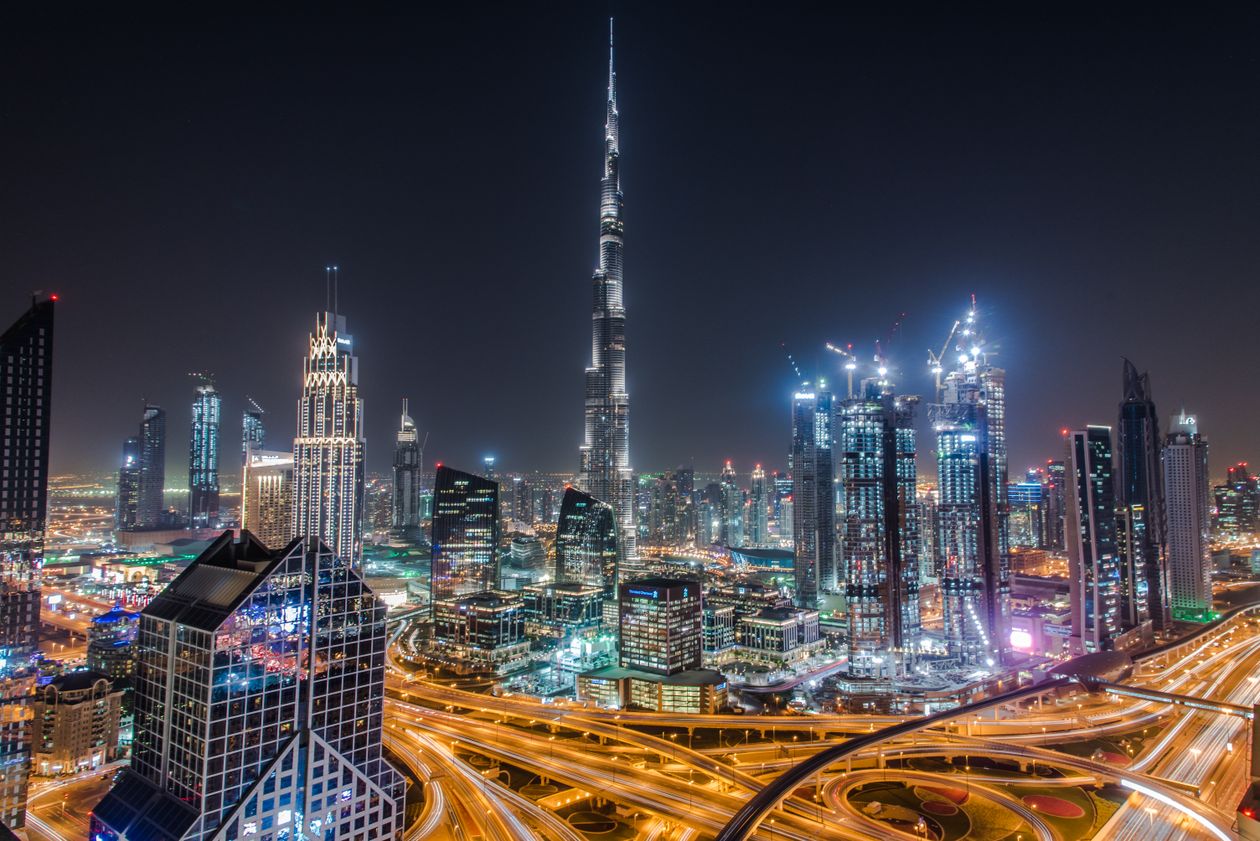
The Shift: From Developer Payment Plans to Embedded Mortgage Rails
The Dubai Holding × Emirates NBD partnership is not a promotional campaign. Read the structure:
- Coverage: Meraas, Nakheel, and Dubai Properties portfolios — three of the most data-heavy developer brands in the UAE.
- Mechanism: mortgage pre-approval at the booking stage, not at handover.
- Eligibility: open to both UAE residents and non-residents, subject to approval.
- Signal: structured financing is now embedded inside the sales process, not bolted on at the end.
Historically, an off-plan buyer who needed leverage had to self-finance through the construction cycle and arrange a mortgage near completion, often with no guarantee that valuation or rate conditions would still support the deal two or three years out. That uncertainty kept the buyer pool narrow: predominantly cash-heavy internationals, UHNW locals, and a thin layer of residents willing to carry the construction-cycle risk unhedged.
Embedding pre-approval at booking collapses that uncertainty. It also pulls a materially wider buyer pool into primary — mortgage-qualified residents, mortgage-qualified non-residents, and end-users who can now underwrite the purchase the same way they'd underwrite a resale or a ready unit.
The second-order effect is the one that matters for allocators:
When financing moves forward in the cycle, absorption becomes less dependent on cash-flow timing and more dependent on credit underwriting. That's how mature primary markets function. Dubai just took its first institutional step in that direction — and it will not be the last Tier-1 to do so.
Why the Timing Is Not Coincidental
Q1 2026 closed at AED 176.7 billion across 47,996 transactions — a 23.4% year-on-year jump in value on just 5.5% volume growth (Dubai Land Department, via Gulf News and construction-sector reporting). Off-plan drove roughly 70% of that value, up from a 55% share in 2024.
Mortgage volume tells the complementary story:
- Q1 2026 mortgage transactions: 11,829 (up 7.5% year-on-year).
- Q1 2026 mortgage value: AED 59.8 billion (up 46% year-on-year).
- Primary-market median villa price: AED 4.1 million, up 35.3% year-on-year.
Mortgage value is growing roughly six times faster than mortgage volume. The system is not adding more loans. It is adding bigger loans, against more expensive units, to a qualifying pool that is shifting upward.
That's the buyer profile the Dubai Holding × Emirates NBD partnership is designed to capture. Q1 signalled the demand. The April 16 MoU built the rail to serve it.
Expect the Template to Copy Across Tier-1
Dubai Holding is not the only Tier-1 developer watching this absorption curve. Emaar, Damac, Aldar, and Sobha all have Q1 2026 sold-through numbers that would justify moving the same rails into their own primary channels. The fäm Properties pipeline analysis released in mid-April showed Emaar at 99.1% pre-sold on scheduled 2026 deliveries and Damac at 99.17%. The capacity to copy this is already there. The incentive — wider buyer pool, faster absorption on the back-half of the pipeline — is obvious.
For allocators: expect two to four Tier-1 developer + domestic bank partnerships in the next four quarters. Each one compresses the gap between Dubai's primary market and a mature Western primary market. Each one moves Dubai's buyer pool closer to institutional-parity financing access.

The Trade-Off: Primary Deepens, Secondary Thins
Here's where the April data gets interesting for a fund manager building an exit model.
Independent market analysis published mid-April (AIQYA Insights, April 16) flagged a pattern that's been building since late 2025: as off-plan's share of transaction value has climbed, secondary-market liquidity has compressed. Capital is concentrating in developer-led primary inventory. Resale transaction depth in several yield-chasing districts has thinned. Price discovery is increasingly being set by launch pricing rather than resale comparables.
For a cash buyer riding the long cycle, this is not a problem. For a leveraged fund or family office with a defined-horizon exit, it is a modelling variable.
Three implications worth underwriting:
- Exit liquidity is tightest in high-concentration off-plan districts. JVC, Dubai South, MBR City, Business Bay — where 45% of Dubai's under-construction supply sits — are the least predictable places to plan a secondary exit in 2028–2030.
- Prime-community liquidity holds differently. Dubai Hills, Downtown, DIFC, and the mature waterfront communities carry a supply-constrained secondary bid that compensates for the broader thinning.
- Rental income has become the default bridge strategy. With Q1 rentals printing AED 32.2 billion in contract value and renewals outpacing new leases by 17,000+ contracts (Dubai Land Department, via Khaleej Times), holding an off-plan unit through handover and into a stabilised rent roll is increasingly the cleanest path to risk-adjusted return — not a forced secondary flip.
The introduction of mortgage rails doesn't eliminate this trade-off. It amplifies it. More primary-market leverage means more primary-market liquidity means — in the near term — relatively less secondary-market activity on a share basis.
The allocators who model this correctly will win. The ones still assuming 2022-era secondary churn will be surprised.
The RAK Counter-Trade: Where Liquidity Is Still Cheap
For anyone looking at Dubai and asking where the liquid capital-appreciation asymmetry still sits in the UAE, the answer this cycle is Ras Al Khaimah.
The 2025 full-year numbers, refreshed in April 2026 market reporting:
- RAK apartment prices: +32% year-on-year in 2025.
- RAK villa prices: +11% year-on-year.
- Prime apartment pricing: AED 2,428 per square foot — a cycle-record high.
- RAK rents: +25% year-on-year.
- Rental yields: 6–8% gross (roughly 150–250 bps above mature Dubai prime yields).
- Tourism arrivals: 1.36 million in 2025 — an emirate record.
The macro catalyst is Wynn Al Marjan Island, the UAE's first licensed integrated resort with gaming, a $5.2 billion capex commitment. The tower topped out at 70 floors in December 2025. Construction resumed on schedule in March 2026. Spring 2027 opening remains the stated target.
The window that matters for allocators: 12 to 24 months of pre-opening runway before the Wynn catalyst fully prices in. This is a single-catalyst asymmetric trade with a defined terminal event — the closest thing the UAE offers to the Macau pre-2006 set-up. Secondary liquidity in RAK is still cheap, and the yield premium over Dubai prime compensates for the smaller market depth during the hold period.
For a Dubai-heavy portfolio, RAK is the barbell trade: Dubai for the institutional compounding, RAK for the concentrated single-catalyst upside.

What the Week Tells You About Where the Market Is Headed
The pattern across the data is consistent. Primary-market infrastructure is being built at institutional grade. Secondary-market liquidity is compressing precisely because capital is migrating into primary. RAK is repricing as its own single-catalyst trade. And Q1 transaction data confirms that the buyer pool entering at this moment is larger, heavier, and more mortgage-qualified than in any prior cycle.
Mortgage rails inside off-plan sales is what a market looks like when it crosses from emerging to institutional. The allocators who wait for Wall Street to call the shift will be buying the back half of a re-rating they could have anchored in the front half.
Three Positioning Questions Worth Running Through Your Model
1. Does your Dubai off-plan underwriting assume cash-buyer absorption, or are you now modelling a mortgage-qualified pool? If it's the former, your demand curve for 2027–2029 deliveries is too conservative. Embedded financing widens the eligible buyer base materially.
2. What's your exit plan — secondary flip or stabilised rent roll? If it's secondary, model a thinner 2028–2030 resale market and stick to prime communities with supply-constrained secondary bids. If it's stabilised rent, the Q1 renewal-heavy rental data supports that path more cleanly than at any point in the prior cycle.
3. Is your UAE allocation Dubai-only? If yes, the RAK asymmetric trade is the clearest single-catalyst add in the region right now. Twelve to twenty-four months of pre-opening runway against a $5.2B catalyst is not a position most mature markets can offer.
The off-plan mortgage shift is the April 2026 signal. The Q1 data is the confirmation. The RAK trade is the diversification.
Reach out if you're evaluating how to position a 2026–2028 UAE allocation against these three dynamics — happy to walk you through the segment-level underwriting behind this analysis.
Sources: Emirates NBD press release and Arabian Business — Dubai Holding Real Estate × Emirates NBD integrated off-plan mortgage financing (April 16, 2026); Gulf News and Construction World — Dubai Q1 2026 property sales data (April 2026); Khaleej Times — Dubai Q1 2026 rental data (April 19, 2026); fäm Properties Off-Plan Pipeline Analysis (April 2026); AIQYA Insights — Dubai Real Estate April 2026 liquidity analysis (April 16, 2026); Economy Middle East and Arabian Business — Ras Al Khaimah 2025 real estate market data and Wynn Al Marjan project updates (April 2026).